
Next Station: Tokyo
Official Description:
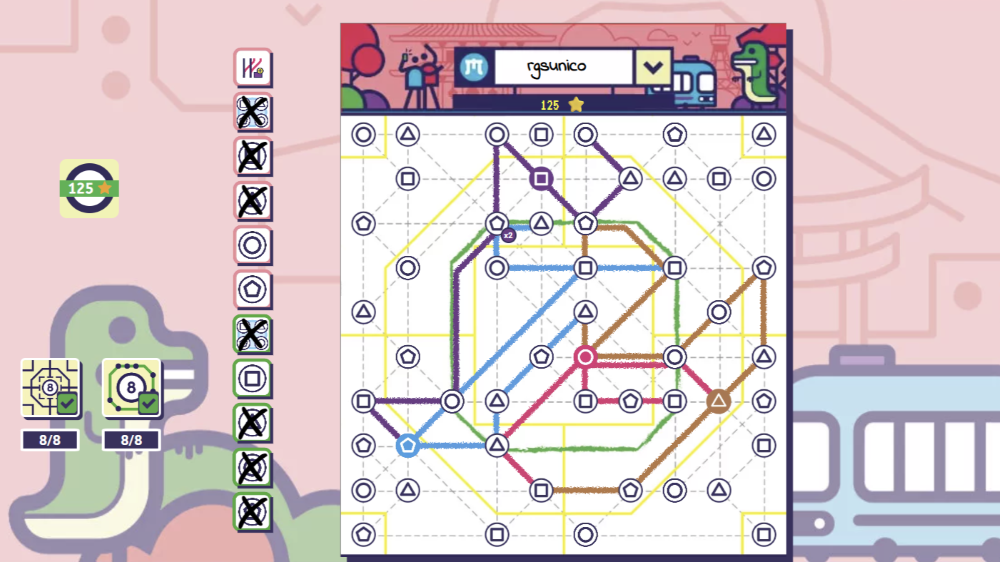
Travel to the city of Tokyo, Japan, and compete to redraw its metro plans to meet the tourist challenges of tomorrow. In Next Station: Tokyo, players take on the role of engineers tasked with designing new subway lines for the city. Each player draws routes on their own map, aiming to optimize connections and efficiently serve key locations throughout Tokyo.
The game is played over four rounds, with each round representing the construction of a new subway line. Players must connect to the green central loop line as effectively as possible, while also considering various objectives and restrictions that change each game. Strategic planning is essential, as players balance the need to cover important districts, maximize network efficiency, and adapt to evolving challenges.
Next Station: Tokyo builds on the mechanics of its predecessor, Next Station: London, introducing new twists and increased complexity. The game offers a compact experience with a small box and footprint, making it accessible yet engaging for both new and experienced players.
Next Station: Tokyo is a sequel that leans into the flip-and-write format, challenging players to redraw Tokyo’s metro with a sharper focus on route optimization and evolving objectives. The green central loop is more than a thematic flourish—it’s a technical constraint that demands careful planning, especially as each round introduces new subway lines and shifting goals. As a modern entry in the Casual & Filler lineage, Tokyo delivers consistent mechanical performance, earning its place as a reliable secondary option for groups seeking a 30-minute puzzle with enough depth to reward repeat plays. Its regular table presence is a direct result of this balance: approachable, but with enough mental friction to keep veteran hosts and new players engaged.
The box is compact, with components designed for quick deployment—ideal for sessions where setup time is at a premium. The physical footprint is minimal, making it easy to slot between heavier games or as a lead-in to a longer night. The digital implementation on Board Game Arena has also boosted its accessibility, letting hosts preview or teach the system remotely before bringing it to the table. For game nights, Tokyo fits best as a gap-filler or opener, offering a satisfying arc without monopolizing the schedule. There’s little overhead in getting started, and the tactile act of drawing routes keeps the experience hands-on without bogging down the flow.
From a teaching perspective, the game sits firmly in the procedural camp: expect a 20-minute teach, especially if you want to clarify the nuances of the green line and the rotating objectives. Once underway, the parallel play structure means you can step back and let the table run itself—players are focused on their own maps, with minimal need for intervention. The main skill dividend is in spatial visualization and adaptive planning; the board quietly audits each player’s ability to balance efficiency with flexibility. The low-interaction format keeps the room’s energy steady, making it a dependable choice for mixed-experience groups or nights when you want to keep things moving without sacrificing engagement.
Category
Casual & Filler
My score
7
Our Total Plays
18
Last PLayed
09 May 26
🔥 In Rotation
Player Count
1-4
Playtime
30 mins
Proficiency Perks
Systems & Logic
Spatial Reasoning
👑 PREMIUM
Play on BGA
Check Amazon
As an Amazon Associate, I earn from qualifying purchases.
← ALL BOARD GAMe REVIEWS