Mother of Frankenstein: Volume Two
Official Description:
Mother of Frankenstein is a narrative puzzle game based on the life of Mary Shelley. It is a collaborative experience featuring 12-18 hours of gameplay divided between three volumes.
In Volume 2, you'll follow Mary Godwin, Percy Shelley, and Claire Claremont to a ball at Castle Frankenstein (yes, Castle Frankenstein was a real place). You'll construct a 500-piece circular puzzle of the castle floorplan in order to work out just what happened that fateful evening. Afterwards, you'll need to solve the puzzles that alchemist Conrad Dippel set for Mary Shelley while educating her in the nascent field of "galvanism"--research that would one day inspire her famous novel.
Mother of Frankenstein: Volume Two continues the series’ narrative puzzle tradition, inviting players into a historical fiction anchored by Mary Shelley’s circle and the real Castle Frankenstein. The session’s backbone is a 500-piece circular puzzle that reconstructs the castle floorplan, setting the stage for a sequence of challenges. While the story progression remains engaging, this installment’s mechanical depth is lighter than its predecessor, making it a reliable secondary option for groups seeking a blend of story and tactile engagement. Its current value to a veteran curator lies in its consistent mechanical performance and the way it sustains interest as a mid-series chapter, even if it doesn’t command the same shelf retention as the opening volume.
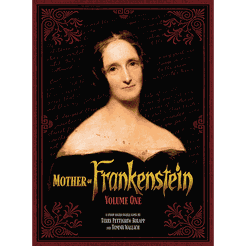
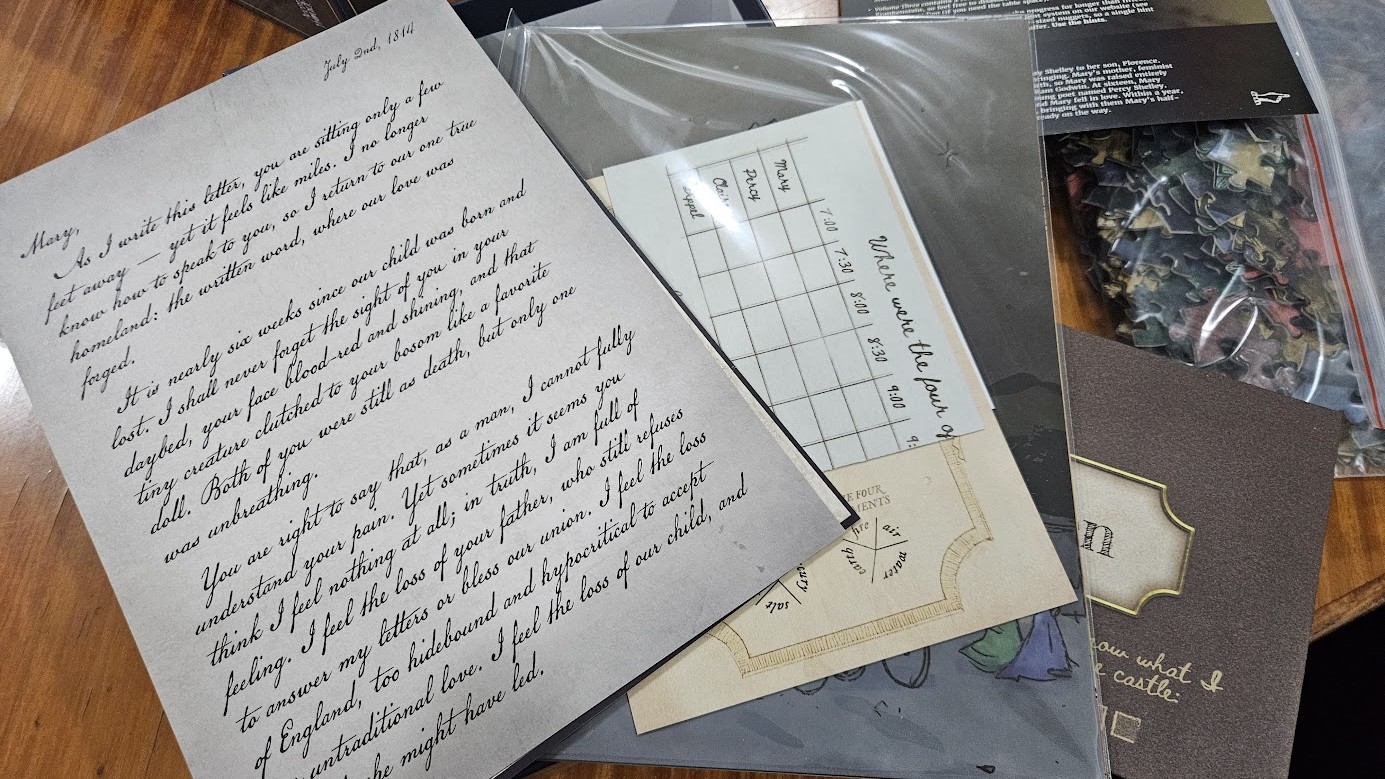
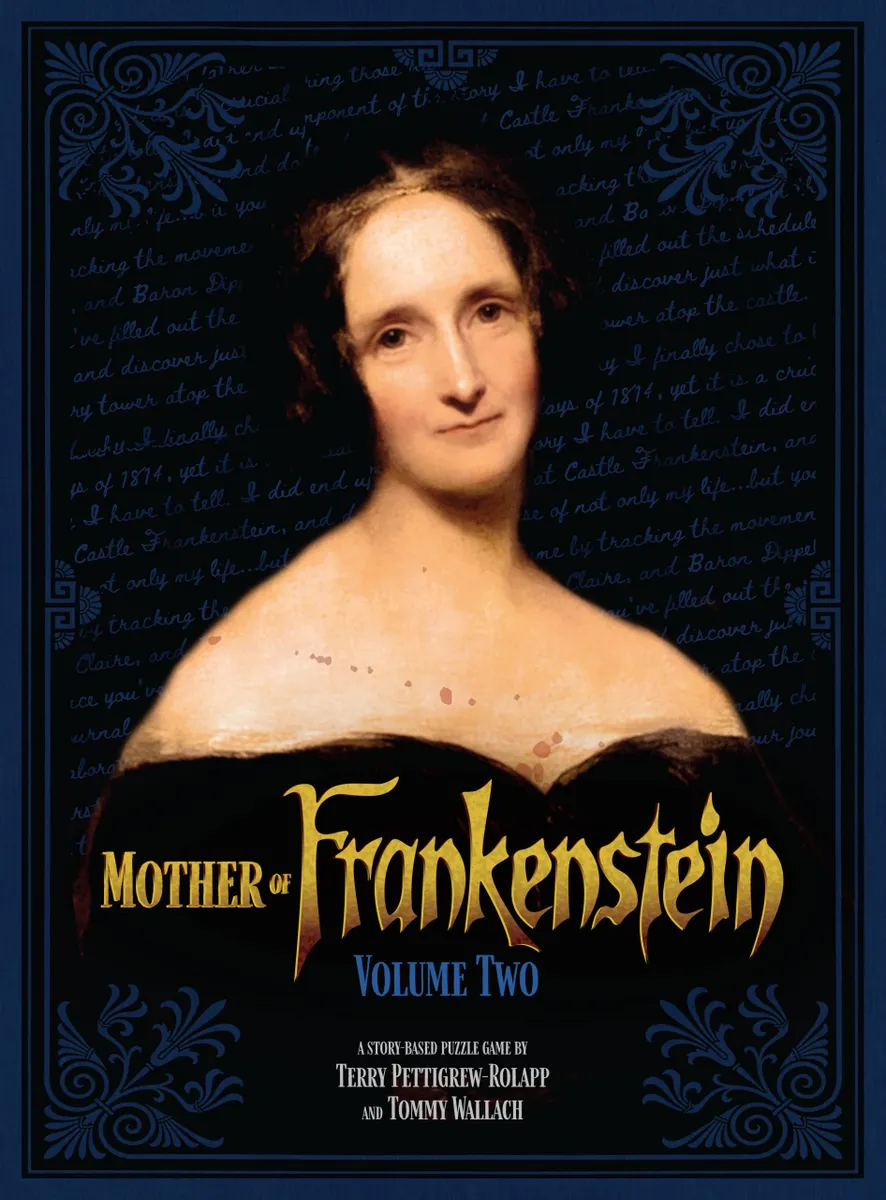
Component-wise, expect premium-grade narrative materials housed in a box that reuses the series’ cover art, signaling a focus on continuity over novelty. Setup and play demand significant table space and time—plan for a full evening, as the 300-minute session and the physical assembly of the puzzle are not casual undertakings. This is a main event title, best reserved for groups ready to commit to a single, immersive experience rather than as a filler between shorter games. The physical logistics—sorting, assembling, and managing the puzzle clusters—require patience and a clear table, but the payoff is a cohesive, story-driven session.
From a teaching perspective, the system is approachable after the initial explanation, with most groups comfortable by the second phase of play. The collaborative structure means the facilitator can step back once the group is underway, allowing the narrative and puzzle-solving to drive engagement. The primary skill dividend is in the mental friction of spatial visualization and logical deduction, as players collectively reconstruct the castle and unravel the alchemical riddles. The cooperative format keeps the room’s energy focused and supportive, making it a solid choice for teams that value shared discovery over competitive tension.
Category
Thematic & Narrative
My score
6.5
Our Total Plays
3
Last PLayed
22 May 26
🏆 Complete
Player Count
1-6
Playtime
300 mins
Proficiency Perks
Systems & Logic
Spatial Reasoning
Check Amazon
As an Amazon Associate, I earn from qualifying purchases.
← ALL BOARD GAMe REVIEWS