Moon
Official Description:
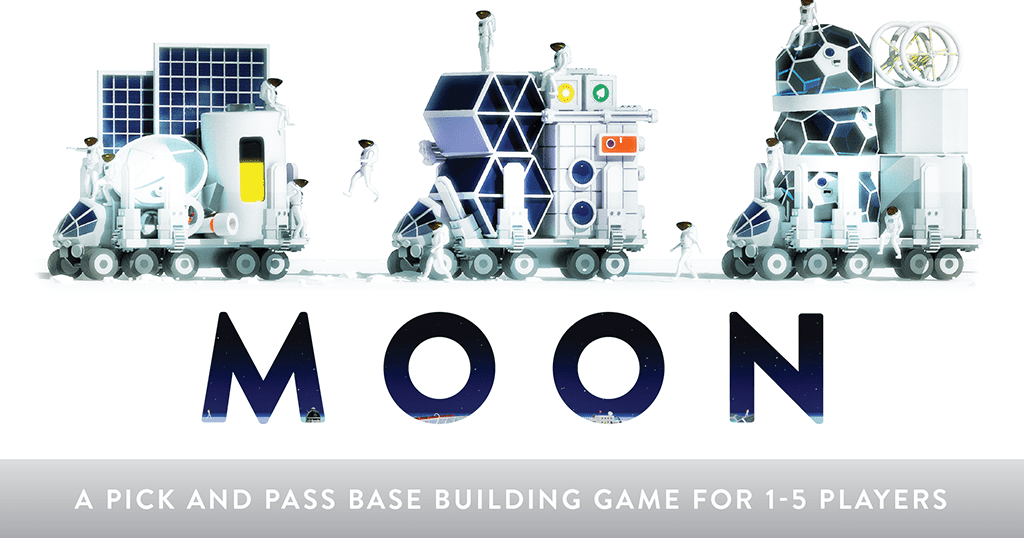
Moon is the third and final entry in Haakon Gaarder’s loose trilogy of games, following Villagers and Streets. In Moon, players compete to build the most impressive lunar base by collecting resources, constructing buildings, and attracting loyal workers. The game uses a unique “pick & pass” mechanism, where players draft cards to expand their bases and gain various abilities.
Throughout the game, players must carefully manage their resources, such as food, energy, and materials, to construct buildings that provide points and special powers. Loyalty is a key aspect, as players vie for the favor of lunar settlers by fulfilling their needs and offering attractive amenities. Strategic planning and timing are essential, as the competition for resources and loyalty intensifies with each round.
Moon features modular gameplay with variable setup, ensuring replayability and diverse strategies. The game’s artwork and components are designed to immerse players in a futuristic lunar setting, while streamlined rules make it accessible to both new and experienced gamers. The player with the most points at the end of the game is declared the winner, having built the most successful moon base.
Moon operates as a modular, card-driven engine-builder that rewards careful sequencing and resource management, echoing the lineage of modern drafting systems while evolving the base-building arc established in Villagers. The lunar setting is more than a skin; it’s a framework for layered decision-making, where loyalty and resource optimization drive the tempo. The game’s mechanical complexity is approachable but not trivial—players must track expedition triggers and rover movement, making each draft a meaningful investment. Its consistent mechanical performance and solid table-time value have kept it in regular rotation, offering enough depth and replayability to justify repeat sessions for seasoned groups.
From a logistics standpoint, Moon’s compact box and dense component load make it a practical choice for hosts managing limited table space. The upgraded components add tactile appeal without inflating setup time, and the efficient footprint means it can serve as a main event for a focused 90-minute slot. While the content density demands some initial sorting, the streamlined organization supports quick deployment and teardown, making it a reliable pick for nights when you want strategic depth without logistical overhead.
Teaching Moon is a procedural affair—expect a 20-minute rules brief, especially if you want to clarify expedition triggers, rover mechanics, and the nuances of card chaining. The parallel play structure keeps interaction indirect, so the room’s energy stays focused but not confrontational. Once the teach is complete, the system largely runs itself, allowing the facilitator to step back and observe. Players walk away with a tangible skill dividend: sharper resource timing, improved sequencing, and a better grasp of how to leverage modular systems for incremental advantage. The game’s structure supports both new and returning players, making it a dependable anchor for groups seeking consistent, low-friction engagement.
Category
Tactical & Strategy
My score
7
Our Total Plays
5
Last PLayed
18 Jul 25
🏛️ Legacy
Player Count
1-5
Playtime
90 mins
Proficiency Perks
Strategic Planning
Check Amazon
As an Amazon Associate, I earn from qualifying purchases.
← ALL BOARD GAMe REVIEWS