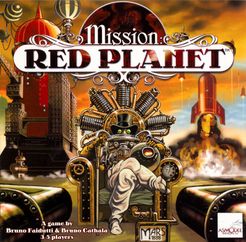
Mission: Red Planet
Official Description:
In Mission: Red Planet, players assume the roles of ruthless Victorian-era mining corporations competing to exploit the resources of Mars. Each player recruits astronauts, equips them with specialized roles, and launches them aboard rockets to various regions of the Red Planet. The goal is to control territories and extract valuable resources such as ice, sylvanite, and celerium, all while outmaneuvering rivals and adapting to unexpected events.
The game is driven by a unique action selection system, where players simultaneously choose character cards that determine their actions for the round. These characters allow players to manipulate rocket launches, sabotage opponents, or gain strategic advantages. Timing and bluffing are crucial, as players must anticipate their rivals’ moves and position their astronauts effectively to secure the most lucrative regions.
Throughout the game, secret missions and event cards introduce additional layers of strategy and unpredictability. As the Martian surface is explored and resources are claimed, players must balance aggressive expansion with careful planning. The winner is the player who accumulates the most points through resource control and successful completion of secret missions by the end of the game.
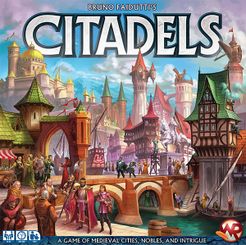
Mission: Red Planet operates as a direct descendant of classic area control systems, but with a sharper edge thanks to its simultaneous role selection and bluff-driven timing. The action selection mechanic—reminiscent of Citadels—forces players to anticipate rivals’ moves, creating a persistent mental friction that rewards both tactical foresight and opportunistic play. Its high player interaction and the constant threat of sabotage or last-minute rocket launches keep the table engaged, while the steampunk Martian theme, though more decorative than immersive, adds a layer of charm. After years of managing tables, I can confirm its solid table-time value: Mission: Red Planet has maintained consistent mechanical performance and shelf retention, justifying its continued presence in any long-term collection.
From a logistics standpoint, this is a surprisingly sprawling production for a Cathala design. The oversized circular Mars board, abundance of plastic miniatures, and multiple ship markers demand a significant footprint and setup time—this is not a quick filler, but a main event for the evening. Expect at least 20 minutes to get everything sorted and explained, especially if you’re introducing new players. The physical system is robust, but it does require a host who’s comfortable with component management and spatial organization. Once underway, the 60-minute session time is accurate, but only if the group stays focused and the teach is tight.
Teaching Mission: Red Planet is a procedural affair; plan for a thorough rules overview, especially around the role selection and the timing of rocket launches. The game’s competitive nature and hidden objectives mean you’ll need to clarify scoring and monitor for confusion in the early rounds. The system’s skill dividend is substantial: players sharpen their ability to read opponents, manage risk, and adapt to shifting board states. The high interaction level ensures the room stays lively—expect plenty of table talk, bluffing, and dramatic reveals. Once the first round is complete, the structure is stable enough for a veteran host to step back and let the table drive itself, making it a reliable anchor for experienced groups.
Category
Tactical & Strategy
My score
7
Our Total Plays
1
Last PLayed
26 Nov 16
🏛️ Legacy
Player Count
3-5
Playtime
60 mins
Proficiency Perks
Strategic Planning
Check Amazon
As an Amazon Associate, I earn from qualifying purchases.
← ALL BOARD GAMe REVIEWS