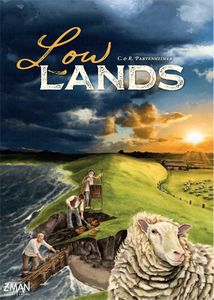
Lowlands
Official Description:
Lowlands is set in a region of the Netherlands where the land is constantly threatened by the sea. Players take on the roles of farmers working to develop their own farms while also contributing to the construction and maintenance of dikes that protect the land from flooding. The game presents a balance between personal gain and communal responsibility, as players must decide how much effort to invest in their own farms versus the shared dike.
Throughout the game, players use worker placement and resource management mechanics to expand their farms, raise sheep, and improve their infrastructure. At the same time, they must cooperate to build and reinforce the dike, as failure to do so can result in flooding that affects all players. The tension between self-interest and group effort is a central theme, with the potential for both competition and collaboration.
Ultimately, Lowlands challenges players to find the optimal strategy for balancing their individual objectives with the needs of the community. The outcome of the game is influenced by both the success of each player's farm and the collective ability to keep the sea at bay, making for a dynamic and engaging experience.
Lowlands operates in the tradition of Euro-style resource management, but its semi-cooperative tension and the physicality of the dike construction set it apart from standard fare. The game’s core is a sharp contest between personal farm optimization and the looming threat of communal disaster, with every worker placement and sheep investment shadowed by the rising waterline. The “Sheep vs. Sea” scoring pivot is a masterstroke—players are forced to audit not just their own board, but the collective pulse of the table, knowing that the dike’s fate can flip fortunes in a heartbeat. This is a system with high operational reliability: it rewards repeat play, and its dynamic scoring and social brinkmanship keep it in regular circulation among veteran groups. For a curator, its significant long-term shelf retention is anchored by the way it consistently delivers tense, memorable sessions.
From a logistics standpoint, Lowlands is a main event title. The box is well-calibrated for its contents, with baggies recommended to keep player pieces sorted and setup time reasonable. The utilitarian artwork keeps the focus on the evolving state of the board, while the physical dike—growing and sometimes collapsing in the center—commands attention and drives table conversation. Expect a 15-minute setup and teardown, with a full session running close to 100 minutes. This is not a filler; it’s the anchor of a dedicated game night, best slotted when the group is ready to invest in a single, high-engagement experience.
Teaching Lowlands is a procedural affair—plan for a 20-minute rules brief, especially if you want to clarify the thresholds for worker actions and the nuances of the dike scoring pivot. The system’s mental friction is substantial: players must constantly weigh individual advancement against the risk of collective failure, and the flood track demands vigilant monitoring. High friction interaction means the room stays alert; every decision is scrutinized, and alliances are as temporary as the tide. The skill dividend here is real—players leave with a sharpened sense of timing, risk assessment, and the ability to read both the board and the intentions of their peers. For hosts, it’s a rewarding teach, but not one you can walk away from; the game’s tension and interdependence require an active lead to keep the session on track.
Category
Tactical & Strategy
My score
8
Our Total Plays
14
Last PLayed
09 Nov 25
🔥 In Rotation
Player Count
2-4
Playtime
100 mins
Proficiency Perks
Strategic Planning
Systems & Logic
Check Amazon
As an Amazon Associate, I earn from qualifying purchases.
← ALL BOARD GAMe REVIEWS