
Let's Go! To Japan
Official Description:
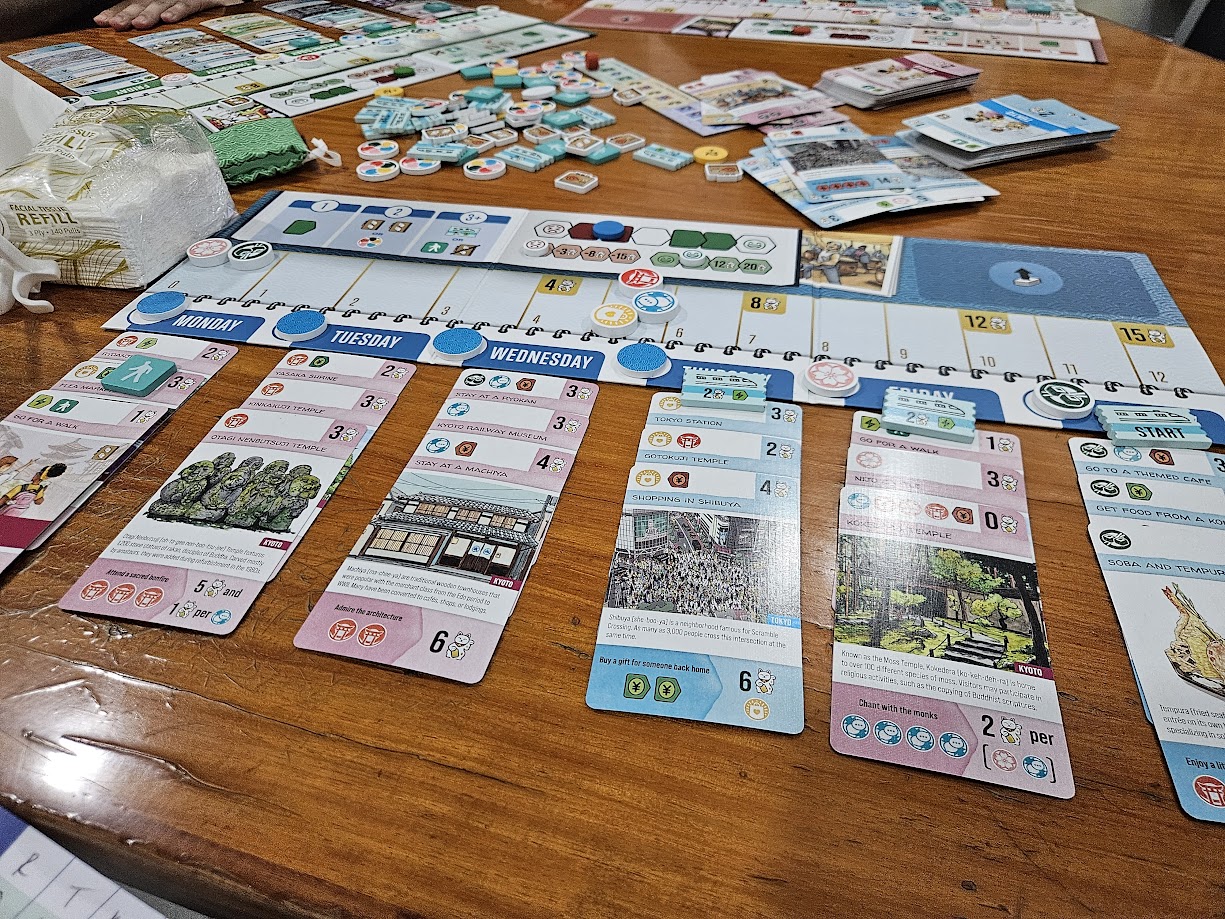
In "Let's Go! To Japan," players take on the role of travelers planning and experiencing their dream vacation to Japan. The game unfolds over thirteen rounds, during which players draw activity cards illustrated by Japan-based artists and strategically assign them to different days in their week-long itinerary. Each decision shapes the journey, as players aim to create the most fulfilling and memorable trip possible.
Throughout the game, players must balance their choices to maximize experiences in both Tokyo and Kyoto, considering the unique opportunities and challenges each city presents. The activity cards represent a variety of authentic Japanese experiences, and careful planning is required to optimize the sequence and combination of activities for the highest score.
At the end of the game, players walk through their planned itinerary, experiencing the trip they have crafted and scoring points based on how well they have managed their time and activities. The player with the most points, representing the most satisfying trip, is declared the winner.
Let’s Go! To Japan operates in the modern set-collection lineage, but its itinerary-driven structure introduces a sharp layer of mental friction that rewards forward planning and sequencing. The game’s core loop—drafting and assigning activity cards to specific days—demands players audit their choices for both immediate and endgame bonuses, especially as daily itinerary rewards are easy to overlook in early rounds. This system delivers a top-tier strategic dividend: the travel theme is more than window dressing, as the tension between Tokyo and Kyoto objectives keeps the table engaged. Its current high operational reliability is reflected in how often it’s requested and replayed—this is a title that’s earned significant long-term shelf retention in my collection, especially among groups seeking a gateway-plus experience that doesn’t overstay its welcome.
Component-wise, the Deluxe Matsuri edition’s cloth bags are a tactile upgrade, but the box is densely packed and teardown requires deliberate sorting to avoid chaos for the next session. Setup and cleanup both land in the 15-minute range, so it’s best positioned as a main event for a weeknight or a featured slot at a multi-table event. The 60-minute session time is accurate, and the physical footprint is manageable, but hosts should budget a few extra minutes for repacking—especially if you want to preserve the deluxe components. For collectors, the upcoming France edition is worth tracking as a regional variant, but the Japan edition’s production quality sets a high bar.
From a teaching perspective, the rules are procedural—expect a 20-minute teach, with most players comfortable by the end of the first round. The parallel play structure means you can step away after the initial walkthrough; players rarely need arbitration, and the system’s skill dividend is clear: it sharpens sequencing and planning under soft time pressure. The room’s energy stays focused but relaxed, as interaction is indirect and there’s little opportunity for direct interference. This makes it ideal for mixed-experience groups or nights when you want a satisfying puzzle without the table politics.
Category
Tactical & Strategy
My score
8.5
Our Total Plays
23
Last PLayed
17 Feb 26
🔥 In Rotation
Player Count
1-4
Playtime
60 mins
Proficiency Perks
Strategic Planning
👑 PREMIUM
Play on BGA
Check Amazon
As an Amazon Associate, I earn from qualifying purchases.
← ALL BOARD GAMe REVIEWS