Disney Villainous: The Worst Takes it All
Official Description:
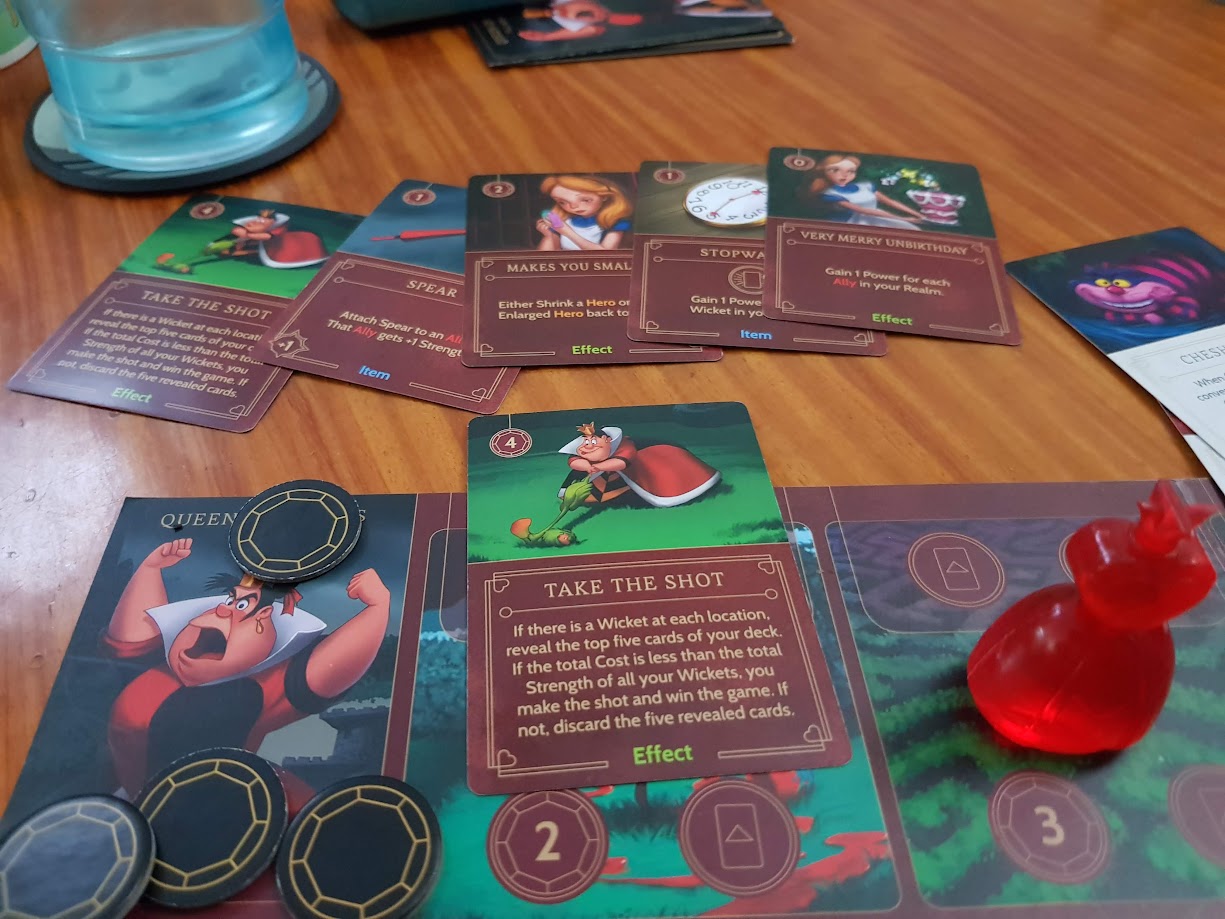
In Disney Villainous: The Worst Takes it All, each player takes on the role of one of six iconic Disney villains: Maleficent, Ursula, Jafar, Prince John, Queen of Hearts, or Captain Hook. Each villain has their own unique objectives and abilities, and players must work to achieve their villain’s goal before their opponents do. The game is asymmetrical, meaning each villain plays differently, with their own deck, player board, and strategy.
Players navigate their villain’s realm, taking actions such as playing cards, activating abilities, and thwarting their opponents by using Fate cards, which introduce heroes and obstacles from the Disney universe. The interplay between villains and the use of Fate cards creates a dynamic and interactive experience, as players must balance advancing their own objectives while hindering others.
Victory is achieved by being the first to complete your villain’s unique objective. Disney Villainous: The Worst Takes it All combines strategic planning, resource management, and player interaction, all set within the rich and familiar worlds of classic Disney films.
Disney Villainous: The Worst Takes it All operates as a modular asymmetric contest, drawing from the tradition of variable power games but with a distinctly cinematic twist. Each villain’s deck and objective are tightly bound to their film persona, and the card-driven mechanics deliver a sharp audit of tactical timing and opportunistic disruption. The Fate system ensures that no player can coast in isolation—every move has the potential to trigger a chain of setbacks or advances across the table. This interplay, paired with the game’s striking art and thematic immersion, delivers high operational reliability and significant long-term shelf retention. Its current status as a regular feature in rotation is no accident; the system’s ability to generate fresh tactical puzzles and interactive moments keeps it relevant for seasoned groups.
From a logistics standpoint, the box contents are well-segmented, with each villain’s components stored separately for rapid deployment. Setup is efficient if the contents are pre-sorted, making it feasible to get the game running within a quarter-hour—ideal for a main event slot on a dedicated game night. The modular design allows for quick character selection and cleanup, minimizing downtime between sessions. At four players, the pacing hits a sweet spot: the session remains engaging without bogging down, and the interactive elements maintain tension without tipping into chaos.
Teaching Villainous is a procedural affair; expect to spend about twenty minutes walking through the core systems and clarifying each villain’s unique win condition. The parallel play structure means you can step back after the initial teach, as players will largely manage their own boards and decks. The primary skill dividend here is in adaptive planning—players must constantly reassess their position in response to Fate interventions and shifting objectives. While direct conflict is limited, the steady undercurrent of interference keeps the room’s energy lively, with just enough interaction to prevent disengagement but not so much as to overwhelm newer players.
Category
Tactical & Strategy
My score
8
Our Total Plays
22
Last PLayed
26 Oct 25
🔥 In Rotation
Player Count
2-6
Playtime
120 mins
Proficiency Perks
Strategic Planning
Check Amazon
As an Amazon Associate, I earn from qualifying purchases.
← ALL BOARD GAMe REVIEWS


