Concordia
Official Description:
Concordia is a peaceful strategy game set in the Roman Empire, designed for 2 to 5 players. Players take on the roles of powerful Roman dynasties, seeking to expand their trade networks and influence across various cities of the Mediterranean. The game emphasizes economic development, resource management, and strategic planning, with no reliance on luck from dice or cards.
Each player uses a deck of cards to perform actions such as moving colonists, producing goods, trading, and building houses in different cities. The cards also represent different Roman gods, each granting points for specific achievements at the end of the game. Players must carefully choose which cards to acquire and play, balancing immediate benefits with long-term scoring opportunities.
Concordia is renowned for its elegant mechanics and depth of strategy. The game rewards careful planning, adaptability, and keen observation of opponents’ actions. With its blend of accessible rules and deep gameplay, Concordia offers a rich and engaging experience for both new and experienced board gamers.
Concordia operates as a modern Euro strategy anchor, leveraging tight card-driven action selection and a persistent tension between expanding your reach and optimizing endgame scoring. The system’s mental friction comes from balancing immediate map presence with the long-term dividends of acquiring the right deity cards—each one quietly shaping your scoring arc. While the rules are approachable, the scoring remains opaque until players cycle through their first Tribune reset and see their engine in motion. This is a title with high operational reliability: it earns its place as a regular feature in any serious collection, thanks to its blend of accessible turns and deep, competitive maneuvering. Its continued presence on the table is a testament to its significant long-term shelf retention, especially for groups that appreciate indirect competition and strategic depth without overt conflict.
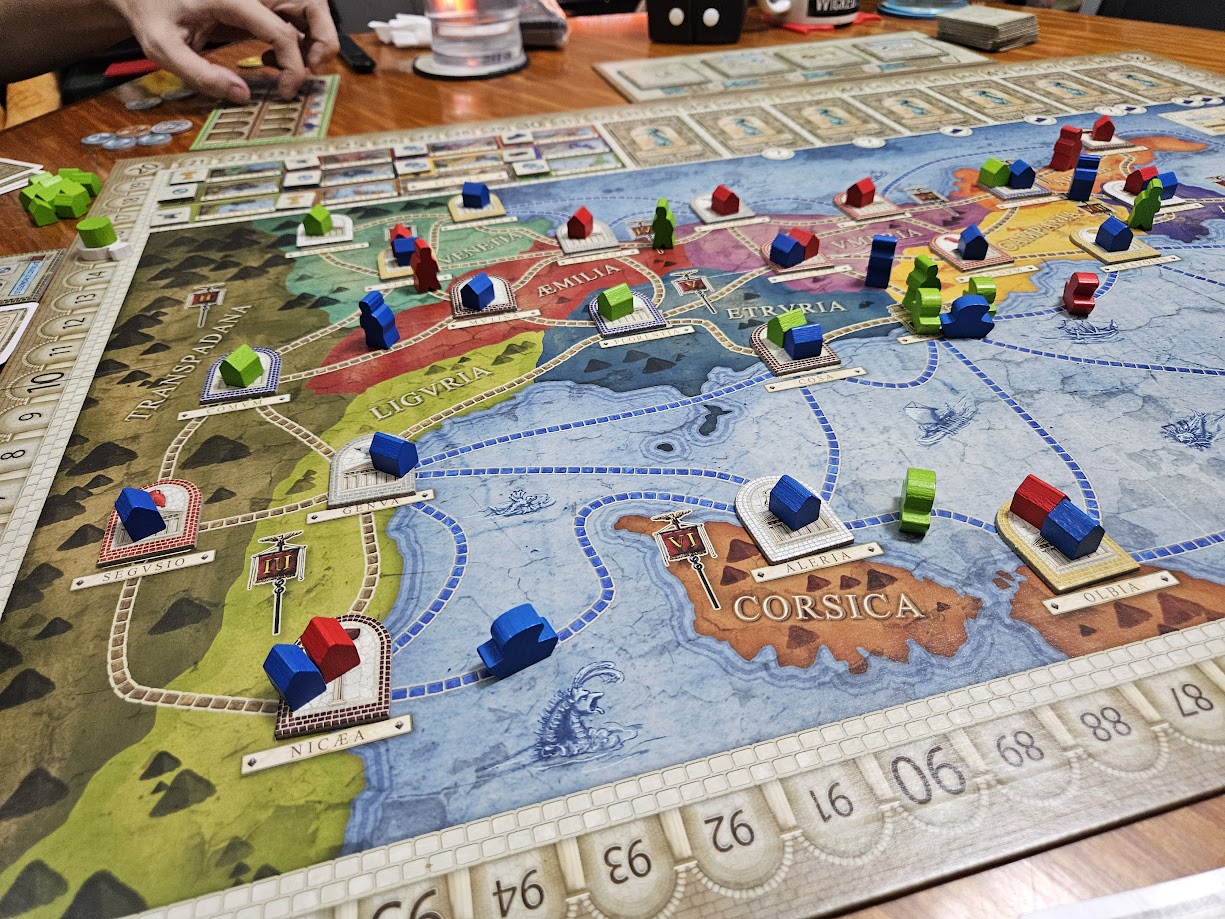
From a logistics standpoint, Concordia is unapologetically demanding. The oversized maps and generous box dimensions require a substantial table footprint, and setup clocks in at a solid 15 minutes—expect to dedicate real estate and prep time before the first move. With a session time pushing 100 minutes, this is a main event game, best suited for nights when the group is ready to settle in and focus. The physical sprawl and sorting overhead mean it’s not a spontaneous filler, but for those willing to invest, the payoff is a session that feels substantial and rewarding.
Teaching Concordia is straightforward—players are comfortable by the second round, and the action set is simple enough to allow the host to step back after the initial explanation. The real skill dividend emerges as players internalize the interplay between card acquisition and map control, sharpening their ability to read both the board and their opponents’ intentions. The competitive, indirect interaction keeps the table engaged and alert, with enough market friction to prevent the experience from devolving into parallel play. The result is a room that stays focused and invested, with each decision carrying weight and every player’s move subtly shifting the landscape.
Category
Tactical & Strategy
My score
10
Our Total Plays
29
Last PLayed
08 Nov 25
🔥 In Rotation
Player Count
2-5
Playtime
100 mins
Proficiency Perks
Strategic Planning
Systems & Logic
👑 PREMIUM
Play on BGA
Check Amazon
As an Amazon Associate, I earn from qualifying purchases.
← ALL BOARD GAMe REVIEWS