
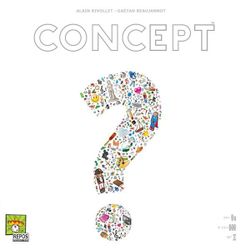
Concept
Official Description:
In Concept, players attempt to communicate a word or phrase to others by combining universal icons on the game board. Instead of speaking or gesturing, players use a system of symbols to convey ideas, allowing for creative and abstract associations. The game is played in teams, with two players working together to select a concept and guide the rest of the players toward the correct answer using only the icons.
The board features a wide array of symbols representing objects, actions, colors, shapes, and more. Players use colored markers to highlight primary and secondary concepts, building a visual clue structure that others must interpret. The challenge lies in effectively combining these icons to represent complex or nuanced ideas without verbal communication.
Concept encourages lateral thinking and teamwork, making it accessible to players of all ages and backgrounds. The game is designed to be inclusive and engaging, focusing on the shared experience of discovery and interpretation rather than competition. Its innovative approach to communication has made it a popular choice for parties and family gatherings.
Concept operates as a modern descendant of classic party games, but replaces pantomime with a structured icon-based system that demands lateral thinking and group interpretation. The core experience is built around collaborative deduction, with players using a shared board of universal symbols to communicate ideas without words or gestures. This approach generates a unique mental friction, as teams must translate abstract concepts into visual cues and then collectively decode them. Its current high table presence is a direct result of its significant long-term shelf retention—groups return to it for the fresh challenge of nonverbal communication and the inclusive, low-barrier entry that keeps mixed-experience tables engaged.
From a logistics standpoint, Concept’s oversized box and sprawling board are at odds with the actual size and clarity of its iconography. The abundance of small symbols can slow down setup and play, especially in larger groups or dim lighting, and the box’s footprint is inefficient for most storage systems. Despite these physical inefficiencies, the game fits comfortably as a main event for a social night or as a substantial opener before heavier fare. Sessions run about 40 minutes, which is enough to establish momentum without overstaying its welcome, but hosts should plan for some table space management and be prepared to assist with icon reference throughout.
Teaching Concept is a procedural affair—expect a 20-minute onboarding, especially for new players unfamiliar with the icon vocabulary. The system rewards facilitators who can bridge the gap between symbol and idea, but once the group is comfortable, the game largely runs itself. The primary skill dividend is in abstract association and group communication; players sharpen their ability to encode and decode meaning under constraints. The competitive structure is light, with the focus on shared discovery rather than strict scoring, which keeps the room’s energy collaborative and lively. For hosts with years of managing tables, Concept is a reliable tool for fostering engagement and creative problem-solving, though it does require an active hand during the first few rounds.
Category
Social & Party
My score
6
Our Total Plays
7
Last PLayed
17 Feb 26
🔥 In Rotation
Player Count
4-12
Playtime
40 mins
Proficiency Perks
Social Meta
Check Amazon
As an Amazon Associate, I earn from qualifying purchases.
← ALL BOARD GAMe REVIEWS


