
Codenames
Official Description:
Two rival spymasters know the secret identities of 25 agents. Their teammates know the agents only by their codenames—single-word labels like "disease," "Germany," and "carrot." Each spymaster wants their team to identify their agents first without uncovering the assassin by mistake.
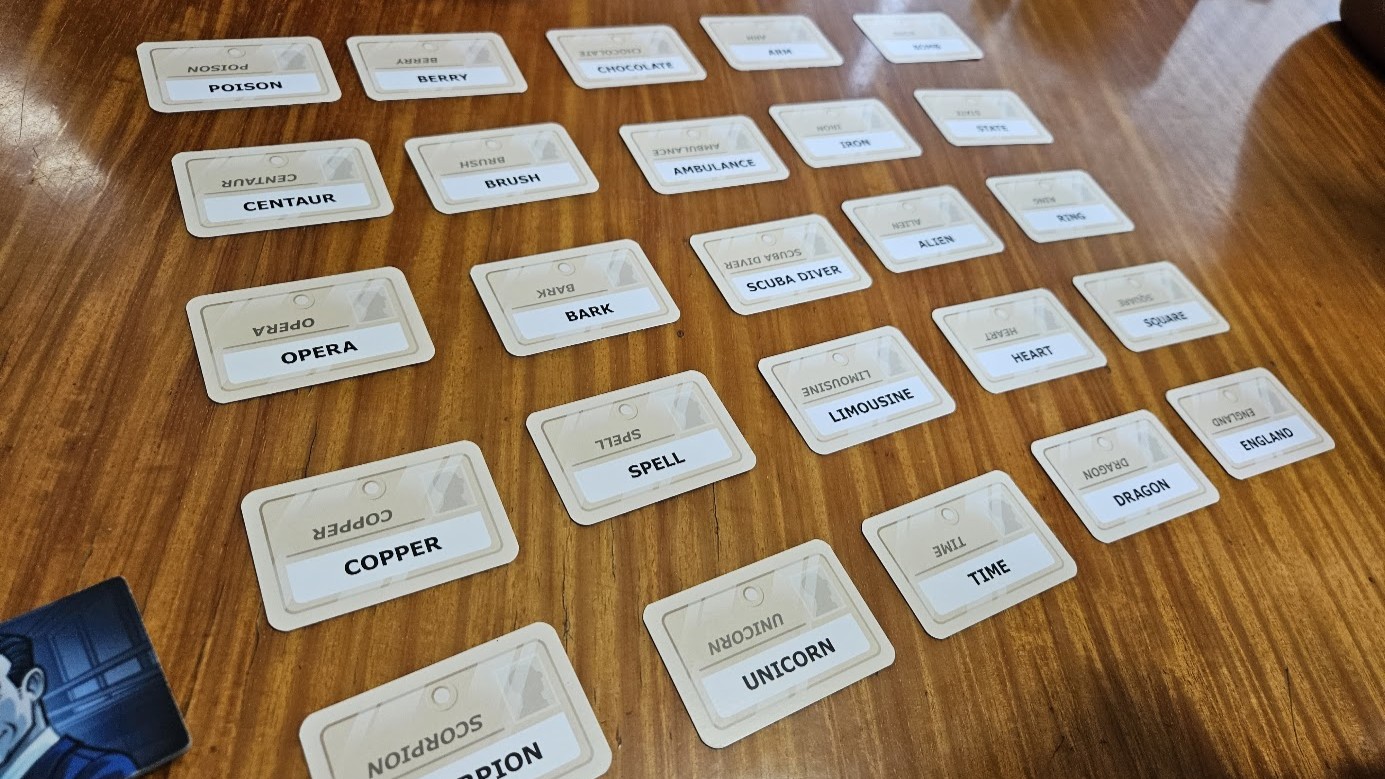
In Codenames, two teams compete to see who can make contact with all of their agents first. The game setup involves 25 cards, each bearing a single word. The spymasters reference a key card showing the identity of each word and take turns providing clues to their teammates. A clue consists of a single word and a number, suggesting how many cards in play have some association to the given clue word. The teammates then identify one agent they think is on their team; if they are correct, they can keep guessing up to one more than the stated number of times. If the agent belongs to the opposing team or is an innocent bystander, the team's turn ends.
If a team identifies the assassin, they immediately lose the game. Spymasters continue giving clues until one team has identified all of their agents or the assassin has removed one team from play.
Codenames stands as a testament to the enduring appeal of team-based word deduction games. Its legacy status is well-earned, having carved out a niche in the social and party game lineage with its accessible yet strategic gameplay. The game’s solid table-time value is evident in its consistent mechanical performance, making it a reliable choice for gatherings. The simplicity of its components belies the depth of engagement it offers, drawing players into a competitive yet light-hearted battle of wits. This balance of simplicity and depth ensures its place in the rotation of any seasoned curator's collection.
From a logistical standpoint, Codenames is a model of efficiency. The game’s minimal table footprint and straightforward setup make it a perfect grab-and-go option for game nights. Its functional text cards, while lacking visual flair, serve their purpose effectively, allowing for quick transitions between rounds. With a session time of just 15 minutes, it fits seamlessly as a gap-filler or a warm-up to more complex games, providing a quick yet satisfying experience without the need for extensive preparation.
Teaching Codenames is a breeze, thanks to its light learning curve. The game’s competitive nature keeps players engaged, while the skill dividend lies in the mental friction it generates, challenging players to think creatively and strategically. The interaction level is high, fostering a lively atmosphere as teams collaborate and compete. This dynamic ensures that the room’s energy remains vibrant, allowing the host to step back and let the game drive the social interaction.
Category
Social & Party
My score
7.5
Our Total Plays
17
Last PLayed
28 Feb 16
🏛️ Legacy
Player Count
2-8
Playtime
15 mins
Proficiency Perks
Social Meta
Check Amazon
As an Amazon Associate, I earn from qualifying purchases.
← ALL BOARD GAMe REVIEWS


