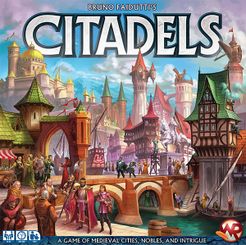
Citadels
Official Description:
In Citadels, players assume new roles each round to represent characters they hire in order to acquire gold and construct buildings. The game is set in a medieval city, where players compete to build the most impressive city by strategically selecting roles such as the Assassin, Thief, Magician, King, Bishop, Merchant, Architect, and Warlord. Each role provides unique abilities that can be used to gain resources, hinder opponents, or protect one's own interests.
The gameplay revolves around bluffing, deduction, and tactical decision-making. Players must anticipate their opponents' choices and adapt their strategies accordingly. The dynamic role selection ensures that each round presents new opportunities and challenges, making every game session unique.
Victory is achieved by constructing a set number of districts in a player's city, with points awarded based on the variety and value of the buildings. The player with the most prestigious city at the end of the game is declared the winner. Citadels is renowned for its engaging blend of strategy, interaction, and replayability.
Citadels stands as a proven city-building contest rooted in the tactical tradition of role-drafting and direct player interaction. Each round, players select from a rotating cast of characters—Assassin, Thief, Magician, and others—each with unique abilities that can upend the table’s balance. The system’s high operational reliability comes from its blend of bluffing, deduction, and adaptive planning, rewarding those who can read the table and pivot their strategy. Its enduring presence in collections is no accident: nearly two decades of managing tables have shown that Citadels consistently delivers significant long-term shelf retention, especially for groups that appreciate a sharp social edge and evolving player dynamics.
From a logistics standpoint, Citadels is a model of efficiency. The slim box, limited to cards and coins, makes it highly portable and easy to deploy in any setting—no sprawling setup or component sprawl. With a 60-minute session time and minimal table footprint, it fits comfortably as a main event for smaller groups or a reliable closer for longer game nights. The physical system is straightforward: open the box, deal the cards, and you’re operational in minutes. This makes it a practical choice for hosts who need flexibility without sacrificing depth.
Teaching Citadels requires a procedural approach, especially for new players unfamiliar with the nuances of role selection and the impact of turn order. The game’s high friction—where targeted actions can dramatically shift momentum—means the facilitator should remain engaged, clarifying role powers and managing the pace to avoid stalls from excessive leader-targeting. The core skill dividend is in reading opponents and managing mental friction: players sharpen their ability to anticipate, bluff, and adapt under pressure. The direct interaction keeps the room’s energy high, ensuring that even quieter tables stay alert and invested throughout the session.
Category
Tactical & Strategy
My score
8.5
Our Total Plays
7
Last PLayed
10 May 16
🏛️ Legacy
Player Count
2-8
Playtime
60 mins
Proficiency Perks
Strategic Planning
Social Meta
Check Amazon
As an Amazon Associate, I earn from qualifying purchases.
← ALL BOARD GAMe REVIEWS