Charterstone
Official Description:
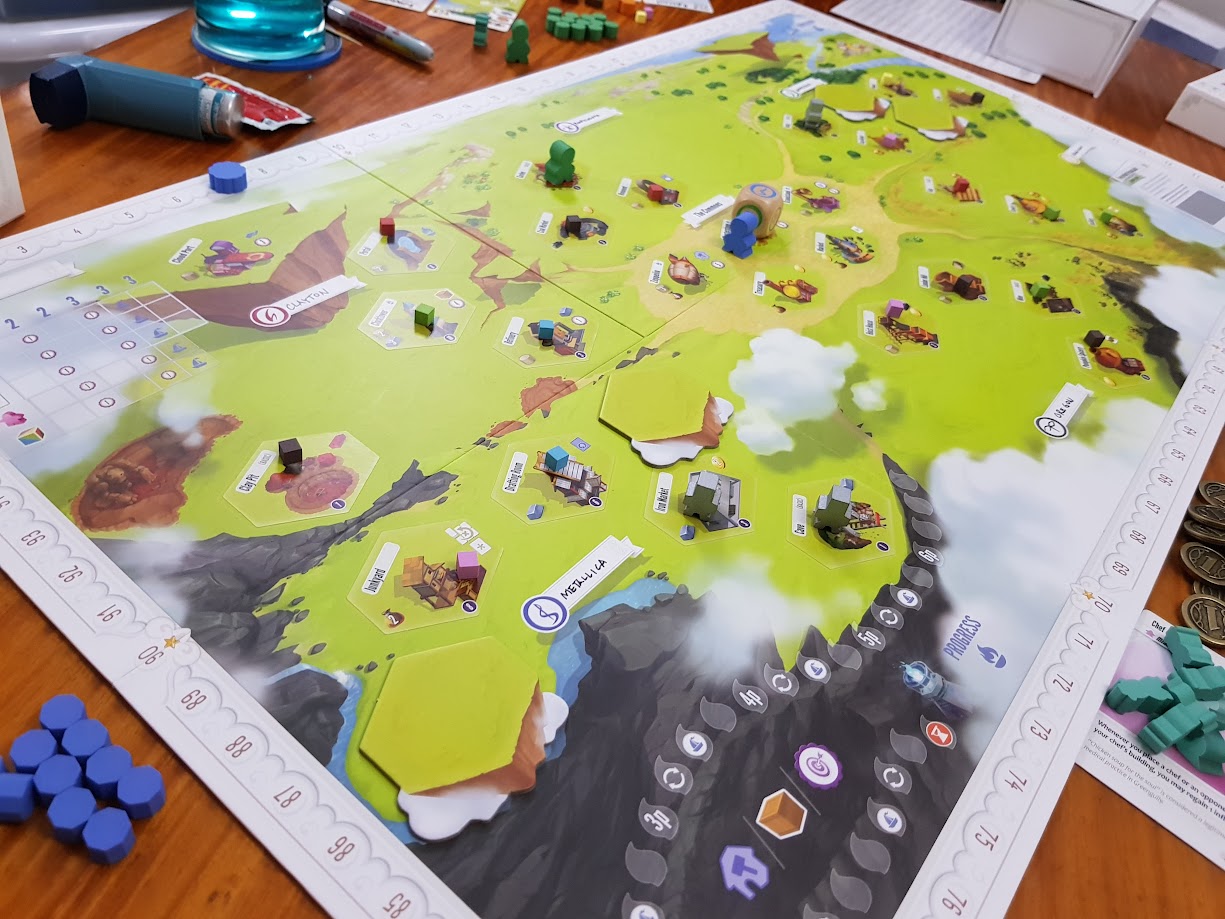
Charterstone is a competitive legacy game for 1-6 players in which players construct buildings and populate a shared village. Over the course of a campaign spanning twelve games, players permanently add building stickers to the game board and unlock new rules, components, and story elements. Each player is responsible for developing their own section of the village, known as a charter, by constructing buildings and managing resources.
As the campaign progresses, the village evolves based on the choices and actions of the players. New buildings provide unique abilities and opportunities, while the legacy format ensures that each play session leaves a lasting impact on the game world. The narrative unfolds as players open crates, revealing new cards and mechanics that expand the gameplay and deepen the story.
At the end of the twelve-game campaign, the completed village board becomes a unique, fully functional worker-placement game that can be played indefinitely. Charterstone offers a blend of strategic planning, resource management, and legacy-driven progression, making each campaign a distinct and memorable experience.
Charterstone operates as a competitive campaign where each session leaves a permanent mark on the shared village, blending worker-placement with a sticker-driven engine that evolves over twelve games. Within the context of legacy Euro-style systems, it stands out for its persistent narrative and the physical transformation of the board, as players unlock new components and rules from sealed mystery boxes. This approach delivers high operational reliability for groups seeking a campaign with significant long-term shelf retention; the completed board becomes a unique, replayable worker-placement game, though in practice, most groups rarely revisit it after the campaign. For a curator, its value lies in the completeness of the experience—Charterstone is a finished project that demonstrates the full arc of legacy design, making it a reference point for both teaching and collection management.
From a logistics standpoint, Charterstone is a main event title, best suited for dedicated groups willing to commit to a full campaign. The box is well-organized, with high-quality wooden tokens and a streamlined save system that minimizes setup between sessions. Mystery boxes add a layer of anticipation but also require careful tracking of evolving components and rules. With a 15-minute setup and 75-minute playtime, it fits comfortably as the centerpiece of a game night, but expect to spend extra time managing the campaign’s progression and ensuring all players are up to speed on the latest rule changes.
Teaching Charterstone is a procedural task—expect a 20-minute rules overview, with complexity increasing as new stickers and rules are introduced. The evolving rulebook demands a steady hand; the system does not allow the teacher to step away, especially in early sessions. The game’s competitive structure keeps the room engaged, with indirect interaction and resource contention driving the energy. Players leave with a strong Skill Dividend in adaptive planning and resource management, as the board’s shifting landscape continually audits their ability to pivot strategies and optimize their charter’s development.
Category
Thematic & Narrative
My score
9
Our Total Plays
13
Last PLayed
29 May 18
🏆 Complete
Player Count
1-6
Playtime
75 mins
Proficiency Perks
Strategic Planning
Check Amazon
As an Amazon Associate, I earn from qualifying purchases.
← ALL BOARD GAMe REVIEWS