Apiary
Official Description:
In Apiary, each player controls one of twenty unique factions of highly-evolved bees in a distant future where humans have vanished and bees have become the dominant species. The game is set in a universe where these advanced bees, known as Mellifera, have developed their own societies and technologies, venturing into space to explore, expand, and thrive.
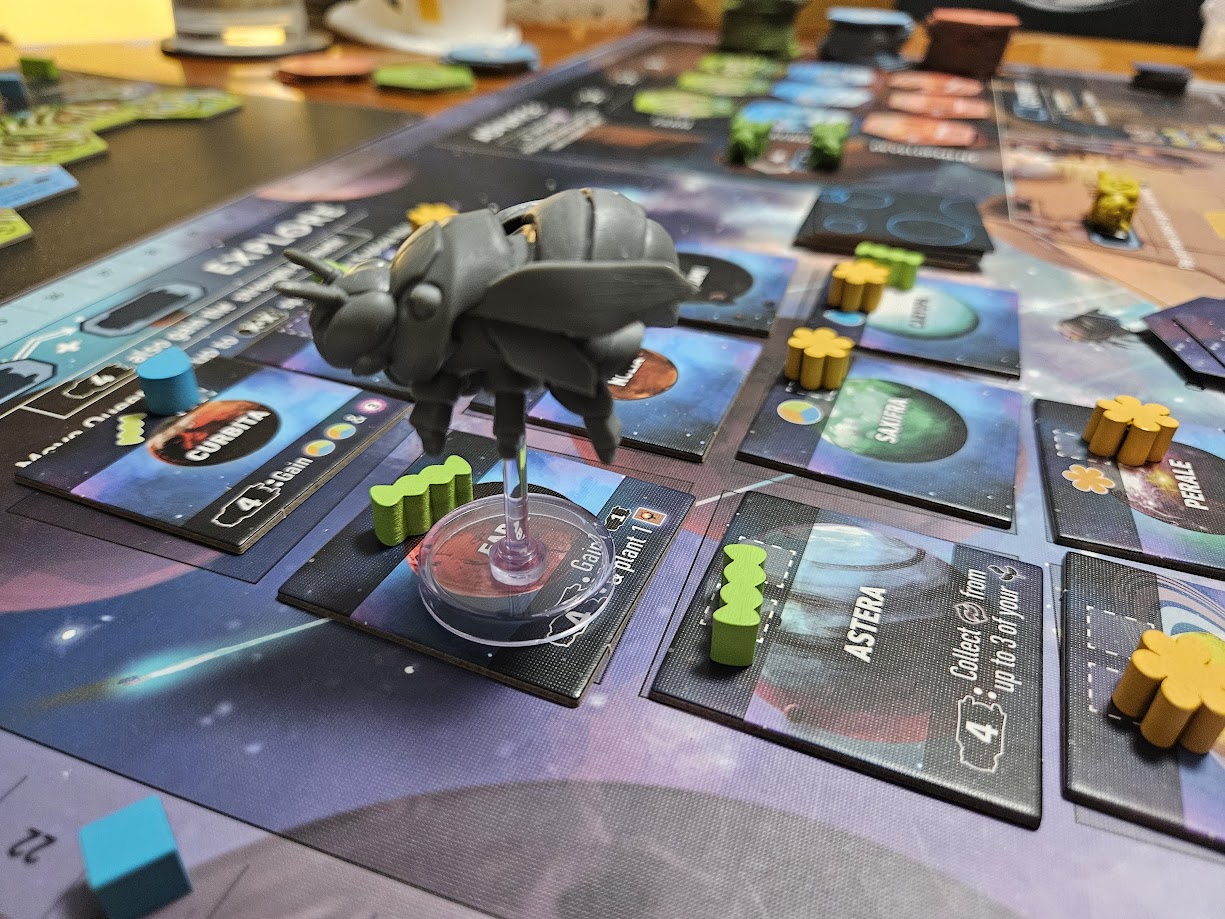
Apiary is a worker-placement, hive-building game where players send their bee workers to explore planets, gather resources, develop technologies, and carve monumental achievements to demonstrate their faction’s prosperity. The game features a unique mechanism where workers “hibernate” after being used, requiring careful planning and timing to maximize efficiency and productivity.
Throughout the game, players must balance resource management, strategic placement, and long-term planning to outmaneuver their rivals and lead their hive to victory. The combination of asymmetric factions, evolving workers, and a richly thematic setting offers a dynamic and engaging experience for fans of strategy and science fiction games.
Apiary operates within the modern worker-placement lineage, but its sci-fi hive-building premise and asymmetric bee factions set it apart from the usual Euro fare. The core system demands careful sequencing—each bee worker cycles between active and hibernating states, so timing your placements and returns is critical. The “bumping” mechanic, where players can displace each other’s bees, injects a layer of tactical tension without devolving into direct conflict. Seed cards, acting as wilds, can swing the late game, rewarding those who anticipate their impact. This is a box with high operational reliability: it’s been in frequent rotation because its blend of strategic depth, unique theme, and positive player interaction keeps it relevant for veteran tables.
From a logistics standpoint, Apiary is a substantial undertaking. The box is packed with resources, tiles, and a notable component count, but the internal insert does streamline setup and teardown. Stonemaier’s production quality is evident, but expect a 20+ minute setup before the first action is taken. This is not a filler or a warm-up; it’s the main event for the evening, best suited for groups ready to invest a full session. The tactile management of components and the need for clear table space mean it’s a commitment, but one that pays off for those who appreciate a well-organized, visually engaging play area.
Teaching Apiary is a procedural affair—plan for a focused 20-minute rules overview, especially to clarify the distinction between active and landing bees, the timing of bumping, and the outsized influence of Seed cards. Once underway, the parallel play structure means you can step back and let the table run, intervening only for edge cases. The system’s mental friction comes from optimizing worker cycles and resource flows, rewarding players who can visualize long-term gains and adapt to shifting opportunities. Interaction is indirect but meaningful, keeping the room engaged without the volatility of direct take-that mechanics. The result is a session where players leave with a sharpened sense of timing and resource management, and the table energy remains focused and positive throughout.
Category
Tactical & Strategy
My score
8
Our Total Plays
22
Last PLayed
30 Aug 26
🚀 High Velocity
Player Count
1-5
Playtime
90 mins
Proficiency Perks
Strategic Planning
👑 PREMIUM
Play on BGA
Check Amazon
As an Amazon Associate, I earn from qualifying purchases.
← ALL BOARD GAMe REVIEWS