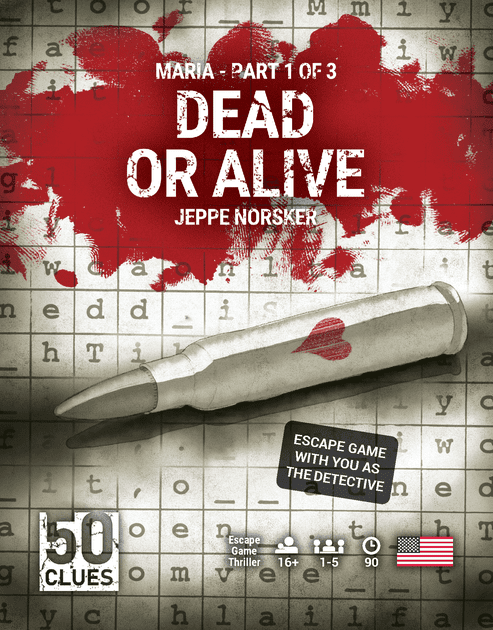
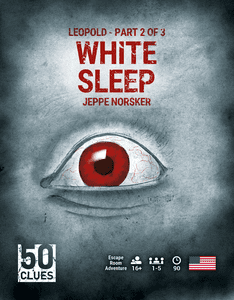
50 Clues: White Sleep
Official Description:
50 Clues: White Sleep is the second episode of the "Leopold" trilogy. In this escape room-style game, players take on the role of Maria, who is trying to save her son while evading the authorities. The game combines immersive storytelling with challenging puzzles, requiring players to use logic, search for clues, and make connections to progress through the narrative.
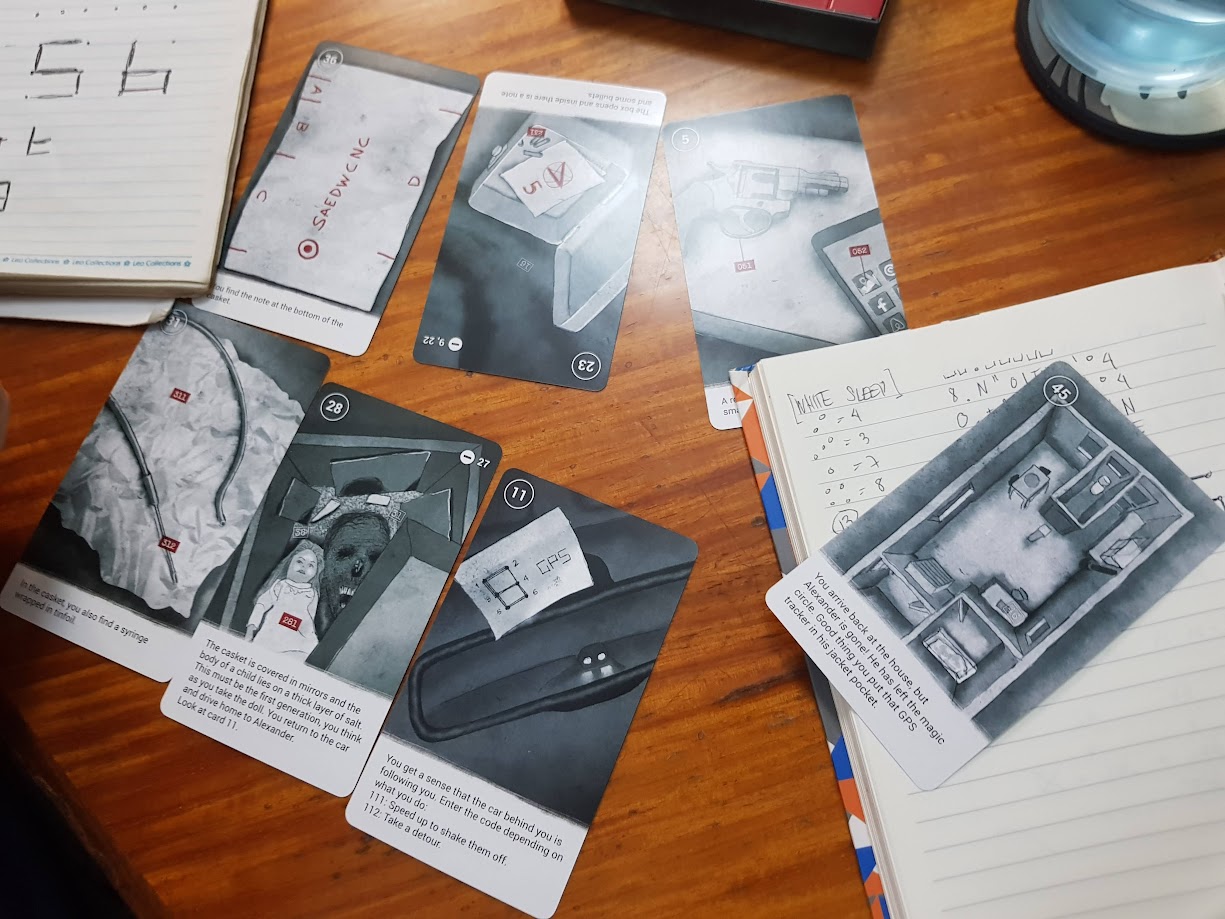
The gameplay is driven by a deck of cards and a digital component, which together guide players through the story and present them with various tasks and riddles. As players advance, they must solve puzzles, interact with the environment, and make critical decisions that affect the outcome of the story. The game is designed for one or more players and offers a cooperative experience, encouraging teamwork and communication.
50 Clues: White Sleep is intended for mature audiences due to its dark themes and intense narrative. It is recommended for players who enjoy immersive escape room experiences and complex mysteries. The game is part of a trilogy, and while it can be played on its own, the full story unfolds across all three episodes.
50 Clues: White Sleep operates as a mature, narrative-driven escape-room experience, threading a gritty psychological mystery through a tightly constructed card system. As the second act in the "Leopold" trilogy, it leverages its dark, Maria-centric storyline to deliver a significant long-term shelf retention for curators who value immersive, adult-oriented content. The game’s high operational reliability comes from its ability to maintain tension and engagement through challenging, logic-heavy puzzles, though the digital code-gate can introduce moments of technical friction. For collections where the title has already been solved, its value shifts: it becomes a reference point for teaching or lending, rather than a repeat play, but its narrative punch and puzzle design still justify its continued presence.
From a logistics standpoint, White Sleep is a model of efficiency. The slim box and card-only components make it exceptionally portable, with a setup that’s as simple as opening the box and logging in. Resetting for another group is straightforward, and the travel-friendly footprint means it can be deployed almost anywhere—ideal for hosts who need a main event that won’t monopolize table space or require elaborate prep. The 90-minute session time is well-calibrated for a focused evening, but the one-and-done nature means it’s best positioned as a featured experience rather than a recurring staple.
Teaching White Sleep is direct: the mechanics are simple, and most groups will be comfortable by the second puzzle. The collaborative structure keeps everyone engaged, and the system’s light learning curve allows a facilitator to step back and let the group drive the session. The mental friction here is substantial—players are pushed to connect narrative clues, sequence logic, and manage collective frustration when the digital interface stumbles. The cooperative format amplifies table energy, rewarding teams that communicate and share insights, and the skill dividend is clear: sharper deductive reasoning and a taste for narrative-driven problem solving.
Category
Thematic & Narrative
My score
8
Our Total Plays
1
Last PLayed
09 Jan 22
🔍 Solved
Player Count
1-5
Playtime
90 mins
Proficiency Perks
Systems & Logic
Check Amazon
As an Amazon Associate, I earn from qualifying purchases.
← ALL BOARD GAMe REVIEWS